
The mainstream food system is designed to maximise profit. It relies on the exploitation of farmers and their land, a heating world and the basic right to food not being met for the poorest in society. The way we grow, supply and consume food at a market level is profoundly broken. But over the past five years of the Just FACT programme, we have witnessed a blueprint for a better food system emerging in Tower Hamlets.
Unlock land, increase food sovereignty
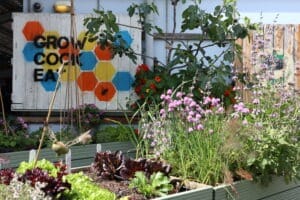
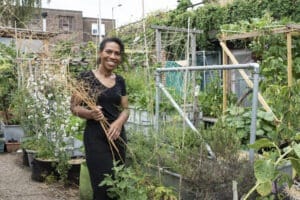
From rooftops to disused garages, alleyways and private back gardens, many growing spaces have been unlocked, but we still haven’t seen the local demand for growing spaces met.
We have seen the potential in thinking creatively about land. Now we need the council to grant a Right to Grow, to provide a mechanism to identify growing spaces and to organise residents’ access.
As we look ahead to increasingly insecure global supply chains, home growing builds resilience in the face of shortages. It also means residents are supplementing their diets with fresh produce, improving their health and wellbeing, often deepening community connection and improving local biodiversity.
Collective approaches to food make us stronger
Every neighbourhood in a fairer food system would have a place where residents can grow, buy, cook, eat, preserve and compost food with their neighbours. Community food hubs save energy and avoid food waste but also help us practice collective habits like preserving, composting and recycling.
Food hubs can also provide critical local recycling infrastructure, where local food waste from homes and schools is turned into energy to power community kitchens and even saunas. Useful by-products like compost and fertiliser can be returned to residents.
These sites also offer places for communities to make sense of and get organised in the face of climate change.
We can make fairer trading models
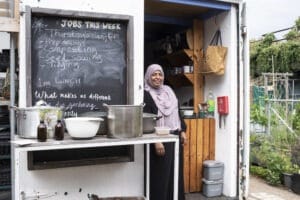
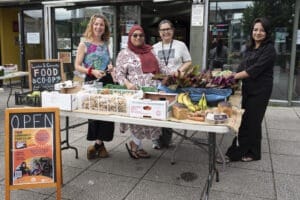
In a fairer food system, not-for-profit food cooperatives would help residents to buy fresh produce at cost. Organic food would be subsidised so people on lower incomes can also benefit from healthier produce. Food Coops would be supplied by small organic farmers who receive fair reward for their produce through pooling schemes, like the scheme being operated right now by the Better Food Shed.
Alongside coops, city and peri-urban farms will have business models supported by diverse income streams, that mean local people can afford to buy fresh, organic vegetables. What’s more, farms will be growing vegetables that are usually otherwise imported, reducing air miles.
A workforce of growers
A key part of this food system is that local people, particularly those who historically have faced barriers to employment in the food sector, are taking up jobs in food hubs, food coops, community gardens and farms. Their leadership helps create food spaces where everyone feels welcome and can participate fully. The money they earn flows in the local economy as they live and buy locally.
Some of these jobs for local people would be funded by the council and charitable funders, but local for-profit businesses need to play their part, donating funds from their incomes to support community ventures.
Community decision making at the heart of this system
At the heart of a fairer food system is community decision making. Residents need to decide where funding for food initiatives goes, through processes like participatory grant making, and community research. With political will, food strategy development can be supported through deliberative democracy approaches. When communities have a say, decisions better reflect their priorities, and resources flow where they are most effective.

Rooted in reality
This might sound like a dream, but every element described has been demonstrated within the Just FACT programme and is rooted in the reality of what is already happening.
Just FACT did not invent these elements. It provided a vehicle to support and resource community wisdom, innovation, and help make connections between organisations.
As Just FACT comes to a close, we are sharing the full story of what this approach has achieved and what it means for the future of food and climate justice.
You can explore our end-of-programme report, watch our short film and read further reflections on the Just FACT blog. We hope you’ll take a moment to see what has already been made possible and consider how you can support this work to grow.